Thursday, 22 August 2013

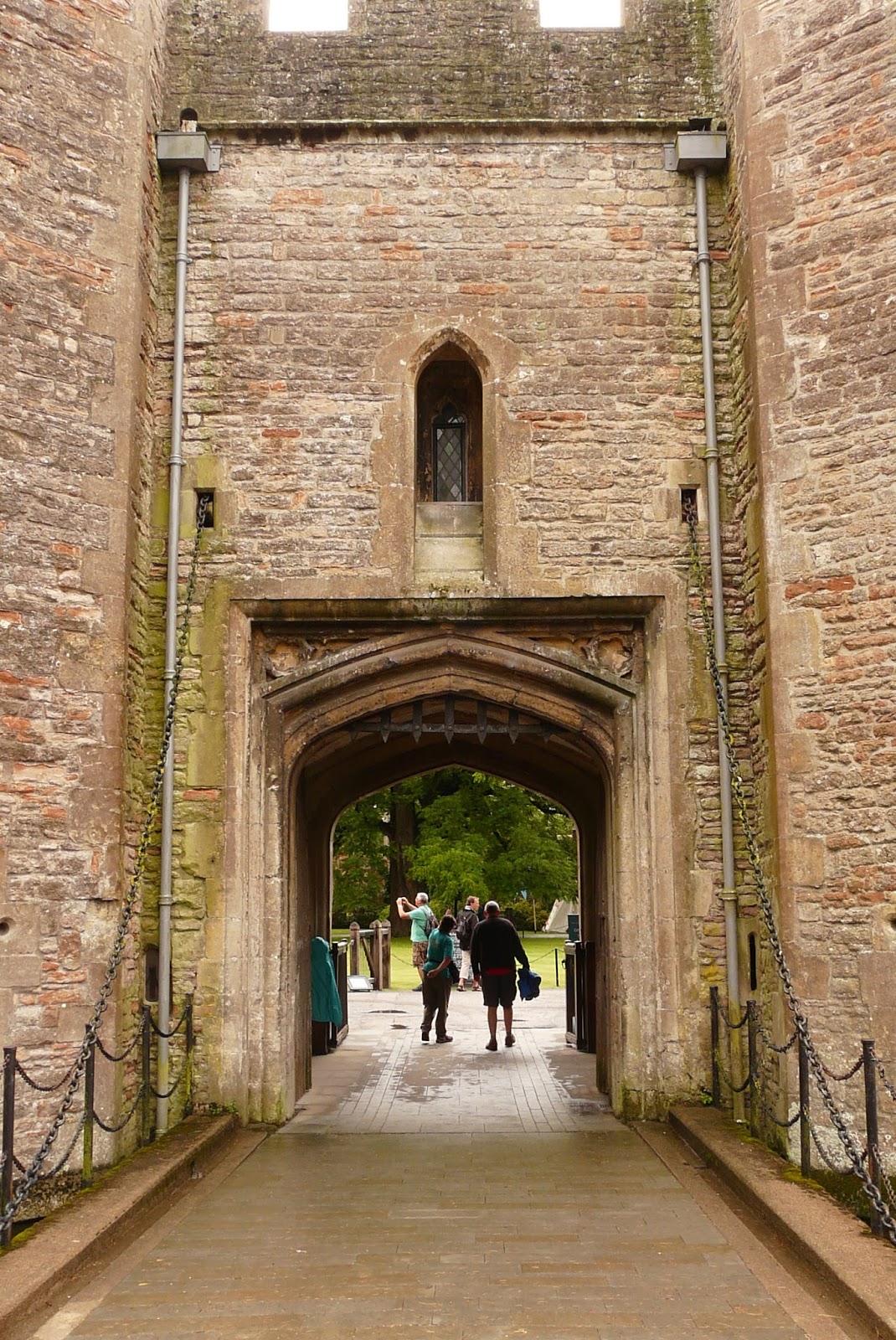
Wells Cathedral


During our stay in Bath we travelled the short distance to Wells.

 Wells is a medieval city, the smallest city in the UK. It is interesting to wander through  the narrow streets. There is a busy main street with the usual shops but also some old and interesting buildings. The movie "Hot Fuzz" was filmed here.

But it boasts a most beautiful Cathedral, and I took the opportunity to visit it.
The wells which still exist today within the grounds of the Bishop's Palace were the reason people first settled here. Water. There is evidence of a Romano British burial chamber. A saxon mortuary church was built near here around 705AD. Later, a minster church was founded.

The building of the present Cathedral began around 1175. Bishop Reginald de Bohun was responsible for the first Gothic style Cathedral in England. 300 of its statues still remain today despite the vandalism of the Reformation.
Though much of the cathedral was left intact, the wall paintings of saints and biblical pictures were whitewashed over. The Chantry Chapels, where masses were said for the dead became redundant.

In 1645, Parliament abolished Bishoprics and closed Cathedrals.15 years later, under CharlesII, it was reopened.
 Like all Catholic Cathedrals, it was built to the Glory of God, and to help people appreciate the wonder and respect due to God.
It is an interesting thought that all the great Cathedrals and Abbeys were Catholic, and the great saints we are proud of, were Catholics.
That all this was swept away so quickly at the Reformation is staggering. And of course, there were problems with some of the Clergy in the Church at that time. But when the Abbeys were destroyed, so too was the Social Care sytem of that time, for the Abbeys were schools, hospitals, chemists, orphanages the hostels for the poor.
All these who had been protected by the Monasteries now found themselves on the streets. And as Cobbet explains so well in his book "A History of the Protestant Reformation in England and Wales", the rich cronies of the King were given these properties. They had no intention of being benevolent. And soon laws were enacted to prevent the poor from entering towns and villages. If they cannot be seen, they are no longer a problem.

http://www.wellscathedral.org.uk/

http://en.wikipedia.org/wiki/Wells_Cathedral


http://uk.images.search.yahoo.com/search/images?_adv_prop=image&fr=yfp-t-702&va=wells+cathedral


Monday, 12 August 2013

The City of Bath

We spent  week with my sister and her husband just outside Bath.

Bath is a place I like to visit. There is much to do and see. The buildings are unique, the stone remarkable. It has a long History.
Like Edinburgh though, it suffers from its popularity, and the streets are crowded with the locals and tourists from all over the world. The traffic is extremely heavy. Parking is difficult and can be expensive too.
Because of its History, from the Romans to the Georgians and of course Jane Austen, you are never likely to be alone in Bath.
But I recommend a visit there strongly. There are many places to visit. The bus tour is very interesting, or the more leisurely horse drawn tour. Don't forget to try a Sally Lunn bun.

Some of my Bath photos.


.

Thursday, 4 July 2013

Edinburgh

We travelled through and stayed with our daughter in Edinburgh on Tusday night. Edinburgh is a difficult place to park during the day. We were able to park free round the corner from 5.30pm till 8.30am next morning. But by 8.15am, there were already 3 walking parking attendants and one on a moped.
We made sure we were away by 8.30am.

Our first stop was North Berwick. As you can see from the photos, it was sunny and quite warm.
We stayed there till about midday. But we drove up to the top of the town where we found a 10am Mass at Our Lady Star of the Sea.
It was a beautiful little Church, and after Mass I took some photos and had a chat with one of the parishioners, Mr McLaughlin, whose son Stephen turns out to be involved in film music in Holywood.
We then went back to the Main Street and had a coffee.

Next on the tour was Dunbar, the birthplace of the naturalist John Muir. We had a bite to eat, and then after some brief shopping, we headed down the Coastal route into England at Berwick Upon Tweed.

On the was we stopped off for a look at another Collegiate Church, Dunglass Church, founded in 1443 by Sir Alexander Home.

This town has had an eventful history, and has been on both sides of the Border separating England and Scotland. Today it is in English Hands.

We bravely ignored the Butcher displaying bags of Pork Scratchings, and the stall selling freshly made doughnuts!

Then it was back to Edinburgh via Coldstream.

http://en.wikipedia.org/wiki/Dunbar

http://uk.images.search.yahoo.com/search/images?_adv_prop=image&fr=yfp-t-702-s&va=dunbar+scotland

http://en.wikipedia.org/wiki/John_Muir

http://en.wikipedia.org/wiki/Dunglass_Collegiate_Church,_East_Lothian

http://www.historic-scotland.gov.uk/propertyresults/propertydetail.htm?PropID=PL_109

http://www.english-heritage.org.uk/daysout/properties/berwick-upon-tweed-castle-and-ramparts/,_